Student Highlight: Meet Austin Bryant
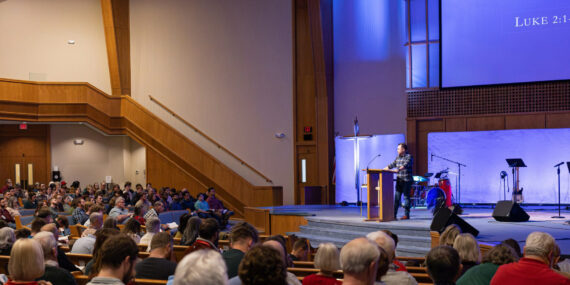
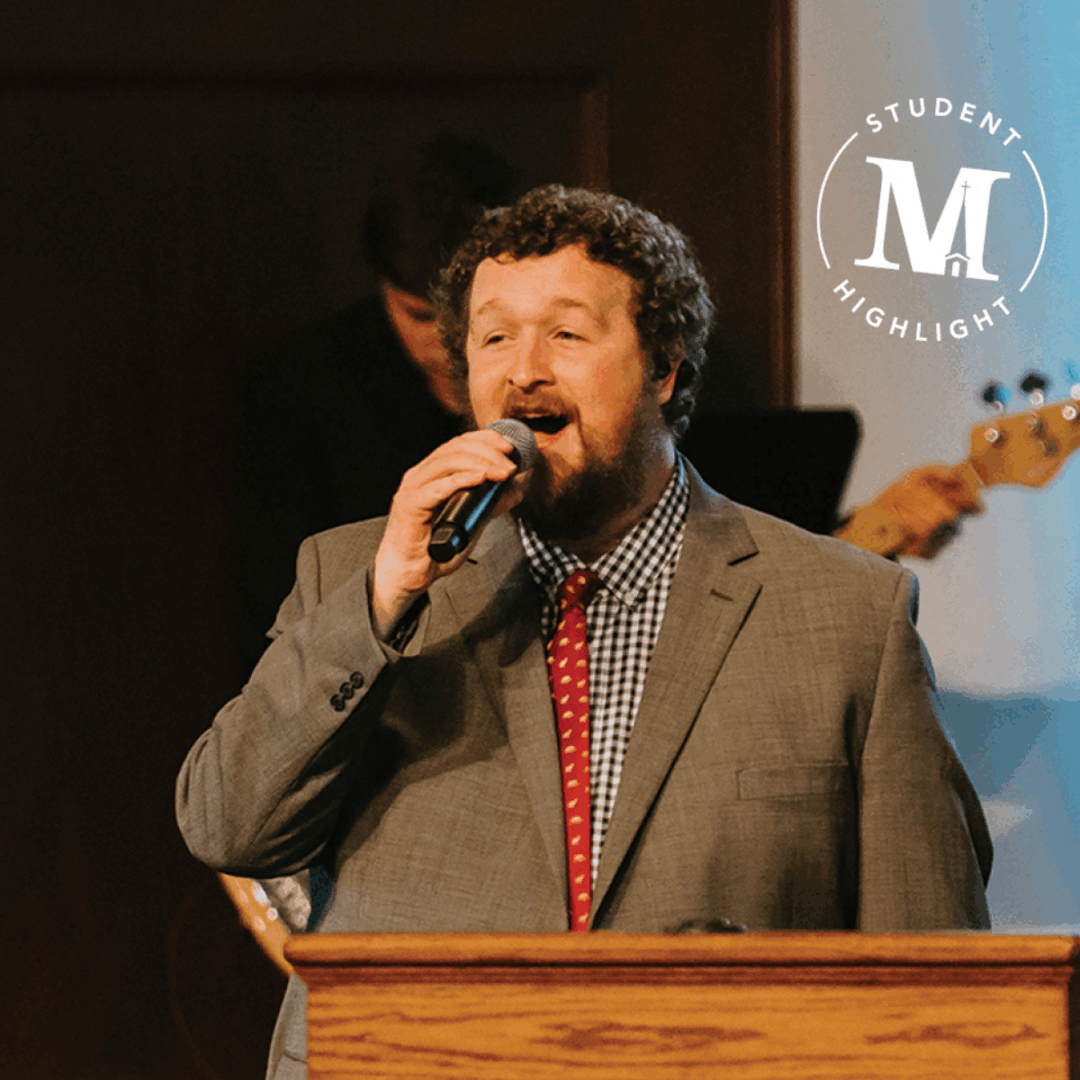
After seven years as a worship pastor, Austin Bryant moved to Midwestern Seminary with his growing family to pursue an M.Div. through For the Church Cohorts. As a member of North Oak Collective, he helps lead worship in Midwestern Seminary’s chapel services as a pianist and vocalist. He and his wife, Deborah, have two children and are members of Mill Creek Community Church.
MBTS: What drew you to pursue an M.Div. in worship ministries at Midwestern Seminary?
Austin Bryant: Over seven years in worship ministry, I became increasingly convinced of my need for more education and a stronger, intellectual, practical, and spiritual foundation for ministry. I was interested in pursuing seminary online because I didn’t think residential education would be feasible for my family.
In October 2023 at the Missouri Baptist Convention Annual Meeting, I heard Dr. Allen announce the Shepherds Fellowship Cohort for the coming fall semester, and that announcement led my wife and me to consider Midwestern.
We had heard that Midwestern was friendly to families, so we decided to bring our little girl to Spring Preview Day and put that to the test. At Preview Day, we began to fall in love with the seminary and realize that we were being led here at just the right time for our family. The Lord provided us with a job, on-campus housing, and ministry opportunities; and I was thoroughly impressed by the academic program, the faculty, the campus, and the community. I became convinced that a residential M.Div. in Worship Ministries is what the Lord had for me during this season.
MBTS: How have your experiences at Midwestern Seminary equipped you to serve the local church?
Austin: While at Midwestern, I have had the joy and honor of serving in the North Oak Collective, helping lead corporate worship for our chapel gatherings. Though I have experience leading corporate worship, North Oak Collective has pushed me to new heights and challenged me to develop new skills. Through Shepherds Fellowship, I have also served as an intern at a local church, where I have learned from my worship minister and collaborated with him in planning and leading worship services. These experiences have given me the opportunity to consider different ideas and perspectives on worship ministry and grow as a musician and church leader.
Shepherds Fellowship has also given me opportunities to discuss and practice various aspects of church leadership with peers and pastors. In class, I discussed matters of philosophy and best practice with other students from varied backgrounds. In my internship, I observed a healthy church, asked questions about the church’s traditions and convictions, and engaged in real ministry. I had the chance to prepare and deliver a sermon, lead a worship service, and assist in youth ministry. All these opportunities have challenged me and taught me different methods of ministry in the local church.
MBTS: Why is music an important aspect of the Church’s call to glorify God?
Austin: Scripture puts an emphasis on music as a mode of worship throughout the Old and New Testaments. The people sang in and around the Tabernacle in the wilderness. The sons of Korah provided music in the Temple. God’s people sang His praises after every major work they saw Him do. Music—especially singing—is a fundamental part of how God’s people worship throughout the Bible.
Colossians 3:16 indicates that one of the purposes of singing in the church gathering is to teach and admonish fellow believers. What an amazing thing to consider! Gathered believers should be singing to and about the triune God, as well as with and to one another as they teach and correct each other through song. Their songs, then, become a unified, public declaration of truth. Setting truth to tune allows our declarations to be proclaimed in unison and unity, showing believers and unbelievers alike that the church is drawn together by something greater than anything its individual members bring to the table.
MBTS: For seminary students and others pursuing theological education, what encouragement would you offer them to help them view their studies as worship?
Austin: It is exceptionally easy, especially for students who thrive in an academic environment, to view seminary education as another task to complete or grade to earn. Colossians 3:23, however, tells the believer to “work heartily, as for the Lord and not for men,” in whatever he does. If one takes this command seriously, it means that while in seminary, every book read, every paper written, every chapel service attended, and every lecture listened to can and should be acts of worship to the Lord. Study can be especially worshipful when a student considers that each piece of a seminary education is an act of preparation for ministry—for “good works, which God prepared beforehand, that we should walk in them” (Eph. 2:10).
Seminary also brings experiences and relationship-building that prepare students for all sorts of ministry. Worship in seminary, then, is also found in building relationships with fellow students, faculty, and staff to the glory of God and the benefit of His Kingdom. A worshipful attitude between classes, around campus, and with online class discussions helps illuminate God’s vision for the universal Church to be united around His Kingdom. A lifestyle of worship is all-encompassing and includes all of seminary life and study.