Student Highlight: Meet Sergey Pikulik
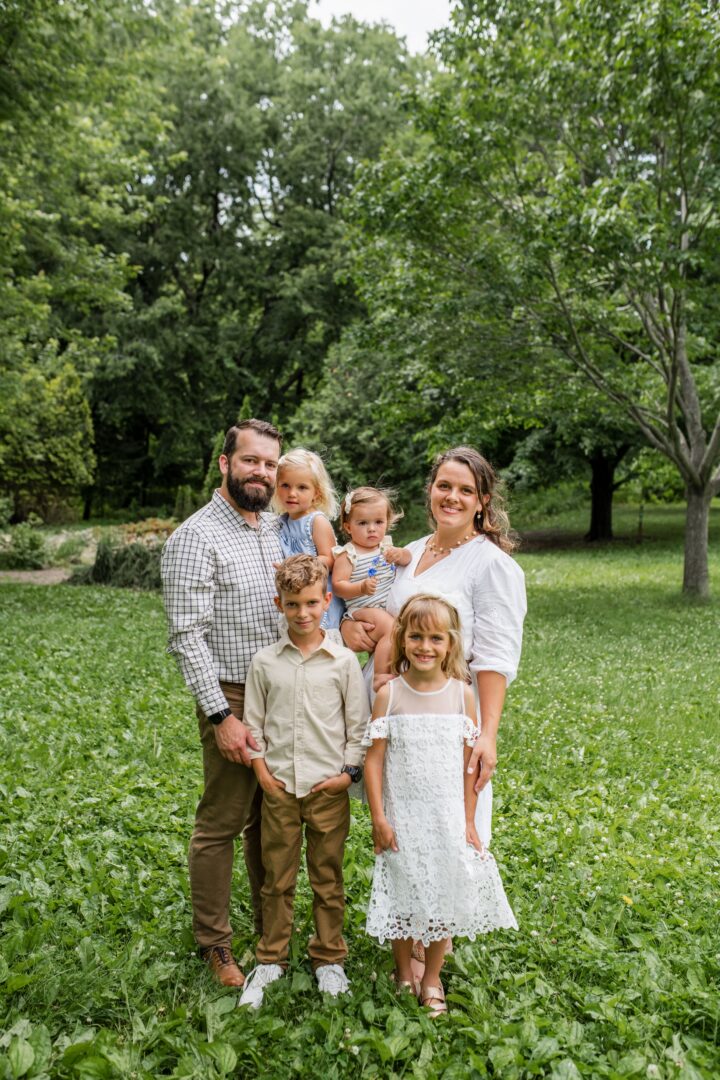
Sergey Pikulik, originally from Kharkiv, Ukraine, moved to the United States with his family at age six. He came to faith at 13-years-old and was baptized soon after. Sergey and his wife, Alina, have four children. In 2024, they relocated from Charlotte, North Carolina, to Kansas City so Sergey could pursue an M.Div. at Midwestern Seminary, where he is active in Student Life and the Biblical Studies Cohort.
MBTS— You have a family, which means you’re busy. Why come to seminary if your life is so full already?
Sergey Pikulik—For someone like me who is married and has a relatively young family, seminary is a challenge. I’ve been married for 13 years, and we have four children, ranging from eight to just one year old. Between feeding, bedtime routines, church and ministry commitments, children’s events, and full-time work, you can imagine how full our days are. Adding seminary—with its homework, reading, writing, and tuition—might seem overwhelming, especially when considering moving across the country instead of pursuing closer or online programs. Why go through this? The simple answer is for the Church, for God’s glory. I believe God planted this desire in my wife and me and has provided all the confirmation, support, and resources to guide us along the path He has for us. Attending Midwestern Seminary allows me to be locally trained and equipped, to build relationships with others in ministry, and to have a support network not just for myself, but for my family and church that we serve in. We also benefit from a great faculty with decades of pastoral experience who can share wisdom that strengthens both our ministry and our home.
MBTS—Are there particular experiences or values from your family that have influenced your preparation for ministry?
Sergey—One important value is that, as a father and husband, I must be active and present in our home. Being in seminary as a father and husband is not an easy task. Making sure that I do well in classes, providing for my family, and being present both as a father and a husband is a sacrificial balancing act. I do not want to place the burden of my seminary education on my family. Yes, we have to adjust schedules and sacrifice some outings, social events, or travel. But ultimately, I don’t want my family to feel the burden of me being away 10 or more hours a day, every day of the week for my schooling. I desire to be a good steward of my time and manage my household well, as Paul commands in 1 Timothy 3 and Titus 1. Every married man’s primary ministry is his home and family. I was already convinced of that going into seminary, but being shepherded by my local pastors, taught by godly professors, and hearing the testimonies of others has shown me that conviction alone is not enough—I must live it out.
MBTS—What practices or rhythms have helped you pursue a Christ-centered home while also managing the demands of seminary?
Sergey—Time is one of those things we can never get back. I quickly realized that I was not stewarding my time wisely, especially when it came to family worship. Dr. Don Whitney’s class on spiritual disciplines really helped me see the importance of prioritizing my family and their discipleship above everything else. We only have so many years with our children before they leave home and start forming their own convictions. Scripture is clear in Ephesians 6:4: “Fathers, do not provoke your children to anger, but bring them up in the discipline and instruction of the Lord” (emphasis added). The responsibility ultimately falls on the father. While your wife is there to help, the father is called to disciple his household, including both his kids and wife. My wife and I adjusted several of our routines to prioritize the discipleship of our family. This included ensuring that our mealtime conversations are meaningful, asking about everyone’s day, and looking for opportunities to weave the gospel into their lives. We also dedicate time to read Scripture together, sing, pray, and engage in other family activities, such as going on father-daughter or mother-son dates. We want to create opportunities to bond with our children while having meaningful, gospel-centered conversations.
MBTS—As you’ve grown theologically, which aspects of family life have taken on new significance for you?
Sergey—I cannot overstate how important my family is to me. Growing up, I witnessed men getting ordained for pastoral or deacon ministry, and one thing often said to them and their wives is, “This man is a minister first, then a husband and a father.” It is no surprise that with that kind of mindset and theology, those wives and children feel neglected, lonely, or spiritually hindered; disciplines and routines become disrupted, and sadly, some families fall apart completely. I have made it my personal goal to prioritize my family. They are my primary ministry, given by God for His glory.