Meet Champ Thornton
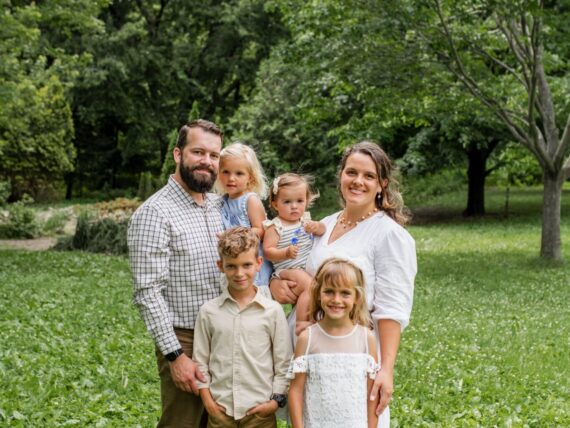
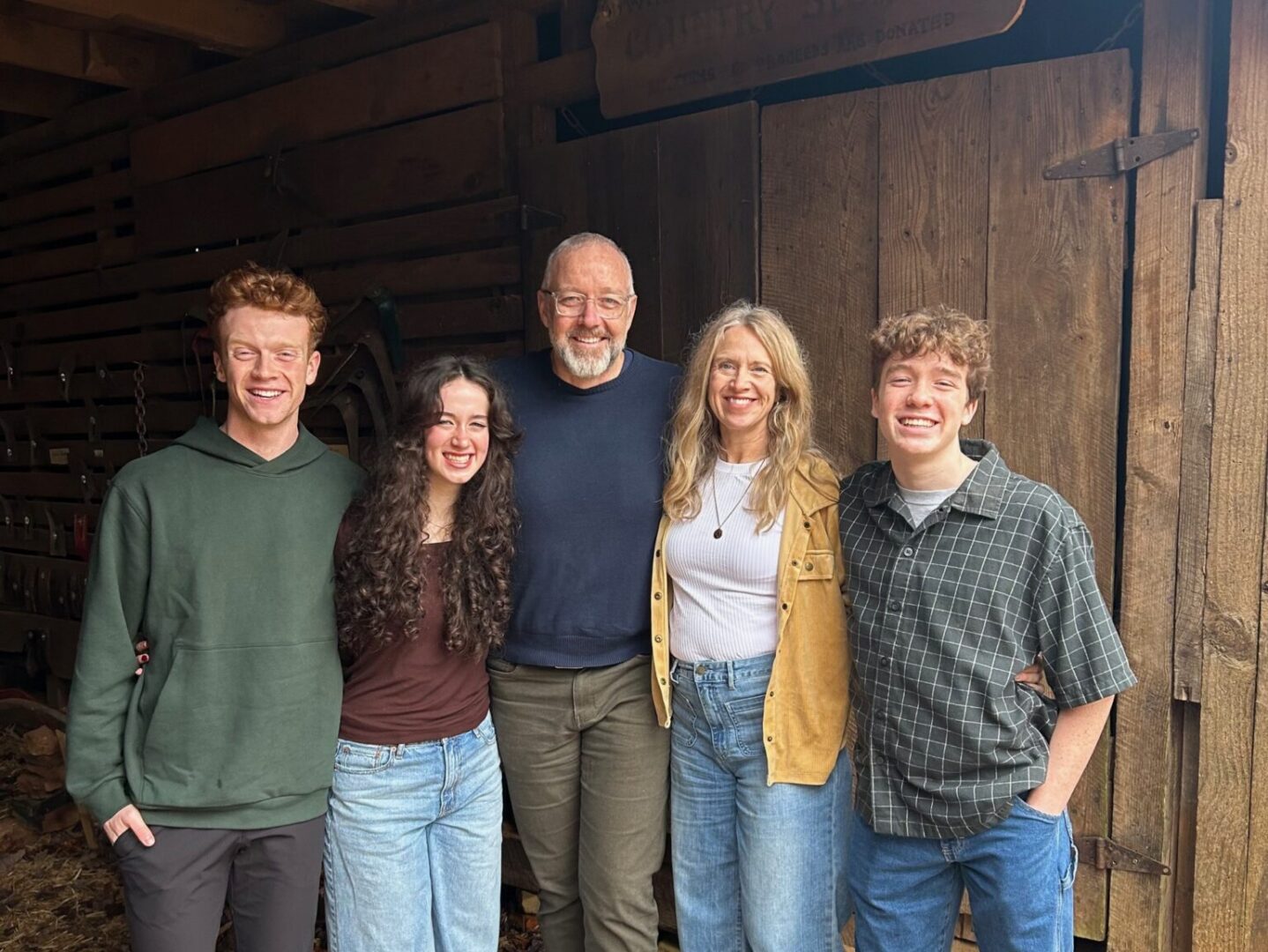
Champ Thornton and his wife, Robben, live in Newark, Delaware, and have three children: Micah, Kenzie, and Jack. Champ is director of Children and Family Resources at Crossway, working on children’s books, acquisitions, and content development. He earned a Ph.D. in Theology from Midwestern Seminary in 2021 and is the author of several books, including The Radical Book for Kids. Learn more at www.champthornton.com.
MBTS—How do you involve your wife and kids in your ministry?
Champ Thornton—As much as I’m grateful when my wife and kids are involved in ministry, I care even more about their desire to serve. If my children grow up helping in church but secretly resent it, I have not served them well. I don’t just want my children involved in ministry now; I want them joyfully serving Christ decades from now.
That means one of the best ways I can involve them is actually by protecting them: guarding our family from seasons when my ministry becomes too all-consuming or too important in my heart. Whenever ministry becomes an idol, our children often pay the price. Somehow as humans we always end up sacrificing our children to our idols, and when I don’t know how to balance the priorities of life, ministry, and family, my wife is a wise and needed help from the Lord.
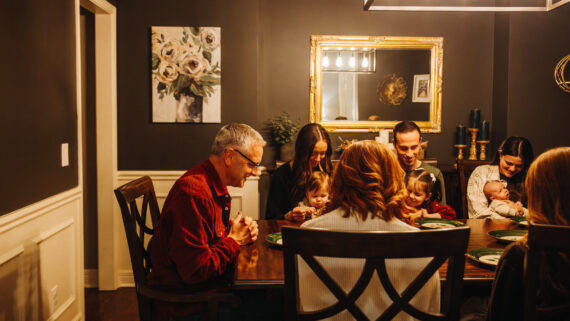
Practically, one of our favorite ways to involve the whole family is simple hospitality. We’ll invite people into our home for meals and conversation. And everyone has a part—setting the table, welcoming guests, talking with them, or helping their kids feel at home. That sets the tone: Ministry isn’t just what Mom or Dad does “out there.” It’s something we all do together because Jesus calls us to love God and love people.
MBTS—What role do good, theological children’s books play in strengthening families?
Champ—The best books, of any kind, help us make up for our limitations. If we can’t travel to a certain country, we can still “go there” through a book. If we don’t recall all the biblical data about a certain doctrine, we can refresh our mind by reading. If we don’t have time to do a deep study on a certain topic, a good book can provide the fruit of someone else’s work.
The same is true with children’s books. Good, theologically rich children’s books give parents language, stories, and illustrations they might not have the time or ability to create on their own. Like divers sometimes use weights to offset their buoyancy and help them go deeper, good Christian books can serve even the youngest readers and busiest families.
MBTS—How has writing for children shaped the way you think about discipling the next generation within the home?
Champ—Writing for children has forced me to think about what kids can actually understand. Most of us feel stuck when trying to explain theological truths to children. It is easy to assume that they are just too young, but the discipline of putting those truths into simple, written words has shown me that the challenge is not usually the child’s age, but the adult’s clarity.
When I struggle to explain something to a child, it’s often because I haven’t fully grasped it yet. But once the concept finally clicks for me, it becomes much easier to put it in terms a child can understand. This realization has helped shape how I view discipleship in the home: One of the best ways we can serve our kids is by doing the hard work of understanding truth ourselves.
MBTS—How do observations from your home—whether through conversations or seeing a need—shape the kinds of children’s books you choose to write?
Champ—Discipling my own children regularly shapes what I write for other children. I write books either that I want my own kids to read or that I think would serve them well.
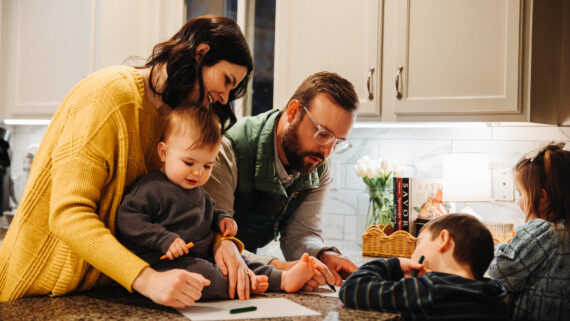
One of the biggest lessons I have learned at home is the power of low-demand habits. When our kids were very young (three or four years old), we encouraged them to have a simple “Bible time” each morning. Usually, this took about a minute or so: open a Bible storybook, look at pictures, turn pages, and say a short prayer. As they got older, it looked different and went a bit deeper, but it still often took only a few minutes.
Over time, that small routine has become normal for them. By the time they reach upper elementary, middle school, and high school, a habit has been formed. Our hope is that as we coach, encourage, and model this practice, they will come to view this daily time in God’s Word as necessary and vital. It’s the daily bread all of us desperately need. That’s one of the dynamics I’ve tried to build into some of my books. I want them to be easy to use and friendly enough for children or families to incorporate into everyday life.