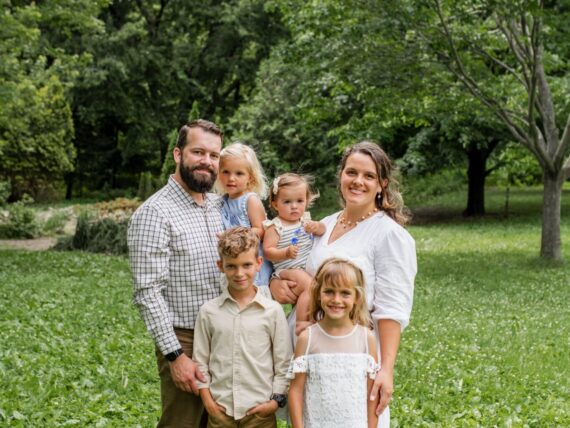
For nine years, The Heights Church has been worshiping Christ and making disciples in Colorado’s most populous city. With a focus on following Christ in biblical doctrine, prayerful community, and ministries of mercy, The Heights pursues the Great Commission in downtown Denver under the leadership of planter and pastor Corbin Hobbs.
MBTS: Tell us about the history of the Heights Church, and how the Lord called you to serve there.
Corbin Hobbs: The Heights Church was planted in late 2016 in the heart of Denver, Colorado. It began in our apartment with a vision to make disciples for the renewal of the city. We met in five or six different locations before eventually purchasing a permanent home on Colfax Avenue. Today, The Heights is made up of 600 members, with around 1,200 worshiping with us on Sundays. God has been incredibly kind.
The journey to Denver began while my wife, Allie, and I were living in Louisville, Kentucky. We moved there so I could attend Southern Seminary, simply desiring to be equipped for service in the local church. Through the discipleship of several mentors, we discerned that planting a new church in an urban center would be the best way to steward our gifts and calling for the glory of God. We moved in 2015, completed a church planting residency with The Summit Church in Denver, and launched The Heights in 2016. Again, God has been so kind.
MBTS: How have you seen theological education contribute to the spiritual growth of your members?
Corbin: My theological education has been an invaluable resource in leading our church toward spiritual growth for three reasons.
First, my education produced theological depth. When making disciples in a context like downtown Denver, there is no substitute for depth. Shallow disciples of Jesus simply do not last over the long haul. The secular current is too strong.
Second, it produced biblical conviction. Seminary gave me the space to allow my convictions—especially around the authority of God’s Word—to be deeply formed and solidified.
Third, it produced pastoral stability. Theological depth and biblical conviction have given me a kind of pastoral steadiness that I’m not sure I would have otherwise developed. This is what has allowed us to stay rooted and fruitful for nearly a decade in the city.
I believe these three elements—depth, conviction, and stability—are what lead to long-term spiritual growth in both a pastor and a congregation.
MBTS: As a pastor, what are some ways you seek to encourage and equip your congregation for worshiping Christ in all of life?
Corbin: The primary measure of any church is the quality of disciples it produces. In a place like Denver, if we don’t intentionally equip our people to be deep disciples of Jesus, the cultural current willcarry them away. To address this, we emphasize five core practices of a disciple and have developed five environments to help equip our people in each one. Our Five Practices encourage our people to read their Bibles, live in community, seek God in prayer, know what they believe, and sacrifice for the mission.
Our Five Environments equip them through men’s and women’s Bible studies, which teach basic hermeneutics and how to read the Bible; community groups, which help them open their Bibles and their lives to one another; prayer rooms to practice Scripture-fed, Spirit-led prayer together; The Heights Institute, a two-semester program to learn the core doctrines of the Christian faith; and Alpha and Lovewell, ministries that equip our people to share their faith and pursue mercy and justice in our city.
MBTS: In what ways have you seen the Lord work in the life of your congregation through gathered worship each Sunday?
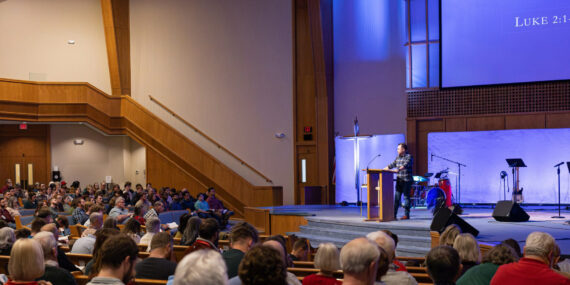
Corbin: We believe everything we do should contribute to making disciples, and the primary disciple-making environment we have is our Sunday gathering. For that reason, we strive to incorporate all five discipleship practices into each service.
We open the Scriptures together. We create space for response and encourage people to pray for one another. I seek to bring theological education into my preaching every week so that we grow in doctrinal depth as a congregation. And we finish each gathering with the benediction, “You are sent,” as a reminder that we are sent into the world to sacrifice for the mission of Jesus.